


New Blog Post
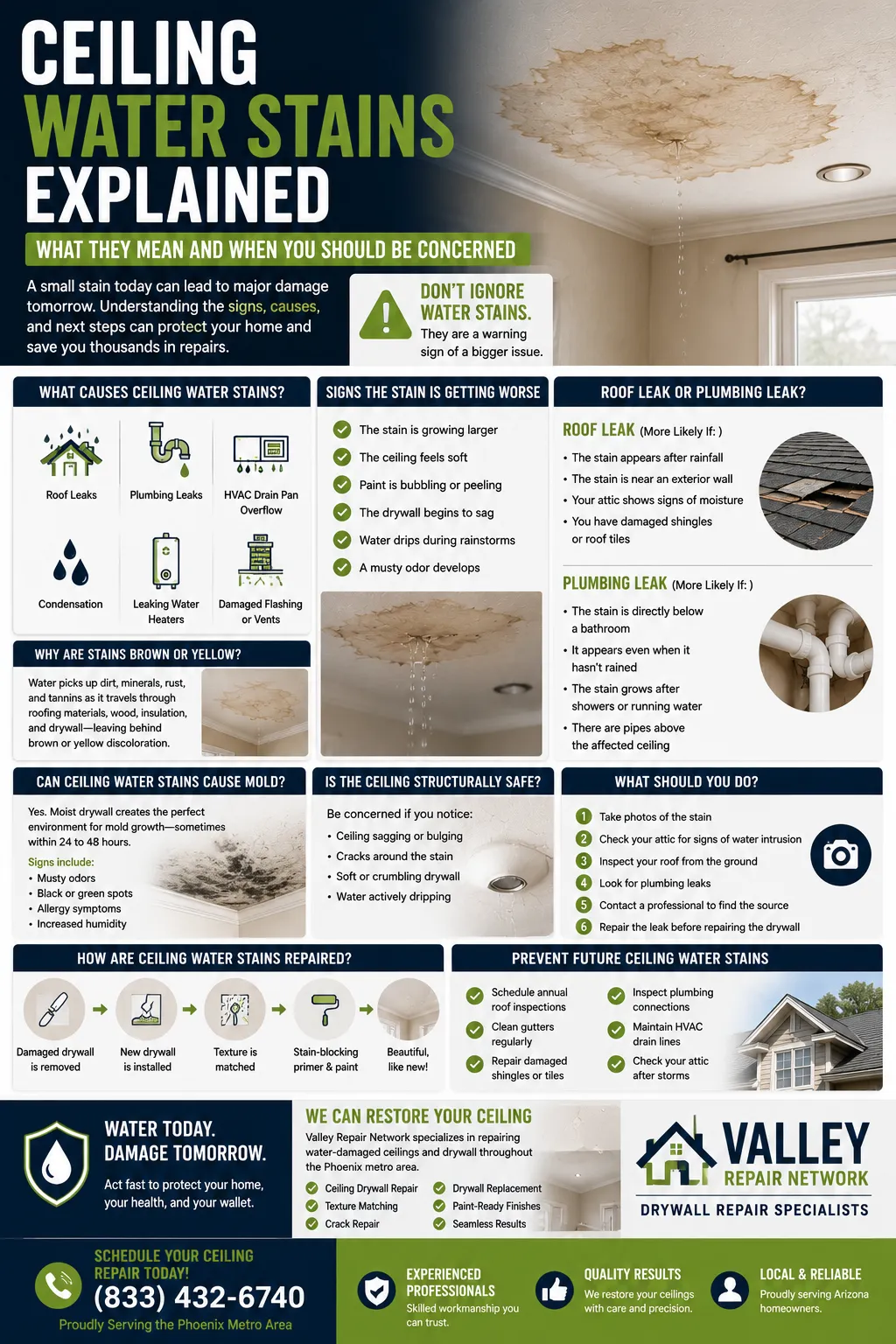
A brown or yellow stain on your ceiling may seem like a cosmetic problem, but it's often a warning sign of something much more serious. Ceiling water stains usually indicate that moisture has entered your home through a roof leak, plumbing issue, or condensation problem.
Ignoring these stains can lead to mold growth, damaged drywall, weakened ceilings, and costly repairs. Understanding what causes ceiling water stains can help you take action before a small issue becomes a major problem.
What Causes Ceiling Water Stains?
Water stains occur when moisture soaks into drywall, plaster, or ceiling materials and leaves behind minerals and discoloration as it dries.
Common causes include:
Roof leaks
Plumbing leaks
Overflowing HVAC drain pans
Condensation from air conditioning units
Leaking water heaters
Damaged flashing around chimneys or vents
Arizona monsoon storm damage
Finding the source of the moisture is always the first step before repairing the ceiling.
Why Are Ceiling Water Stains Brown or Yellow?
As water passes through roofing materials, wood framing, insulation, or drywall, it picks up dirt, minerals, rust, and tannins.
These contaminants create the familiar:
Yellow stains
Brown rings
Dark water spots
Discolored patches
The stain itself isn't the problem—it's evidence that water has already entered your home.
Signs the Stain Is Getting Worse
Watch for these warning signs:
The stain is growing larger.
The ceiling feels soft when touched.
Paint is bubbling or peeling.
The drywall begins to sag.
Water drips during rainstorms.
A musty odor develops.
If any of these occur, the leak may still be active and should be addressed immediately.
Roof Leak or Plumbing Leak?
Not every ceiling stain comes from the roof.
A roof leak is more likely if:
The stain appears after rainfall.
The stain is near an exterior wall.
Your attic shows signs of moisture.
You have damaged shingles or roof tiles.
A plumbing leak may be the cause if:
The stain is directly below a bathroom.
It appears even when it hasn't rained.
The stain grows after showers or running water.
There are pipes above the affected ceiling.
Correctly identifying the source prevents unnecessary repairs.
Can Ceiling Water Stains Cause Mold?
Yes.
Moist drywall creates ideal conditions for mold growth.
Mold may begin growing within 24 to 48 hours if moisture remains trapped inside the ceiling.
Signs include:
Musty odors
Black or green spots
Allergy symptoms
Increased indoor humidity
Prompt repairs help reduce the risk of mold spreading throughout your home.
Is the Ceiling Structurally Safe?
Small stains don't always indicate structural damage.
However, you should be concerned if you notice:
Ceiling sagging
Bulging drywall
Cracks around the stain
Soft or crumbling drywall
Water actively dripping
These signs may indicate significant water damage that requires immediate attention.
What Should You Do If You Notice a Ceiling Water Stain?
Follow these steps:
Take photos of the stain.
Check your attic for signs of water intrusion.
Inspect your roof from the ground for visible damage.
Look for plumbing leaks if the stain is below a bathroom or kitchen.
Contact a qualified roofing or plumbing professional to identify the source.
Repair the leak before repairing the drywall.
Fixing the stain without addressing the leak will usually result in the damage returning.
How Are Ceiling Water Stains Repaired?
Once the leak has been fixed, damaged drywall may require:
Drywall replacement
Ceiling patching
Texture matching
Stain-blocking primer
Interior painting
Professional repairs restore your ceiling so the damage is no longer visible.
Prevent Future Ceiling Water Stains
Preventive maintenance can help protect your home.
Consider:
Annual roof inspections
Cleaning gutters regularly
Repairing damaged shingles or roof tiles
Inspecting plumbing connections
Maintaining HVAC drain lines
Checking your attic after heavy storms
Regular maintenance helps identify small problems before they become expensive repairs.
Valley Repair Network Can Restore Your Ceiling
If your home has ceiling water stains caused by a roof leak or water damage, Valley Repair Network is here to help. We specialize in repairing damaged drywall and ceilings throughout the Phoenix metro area.
Our services include:
Ceiling drywall repair
Water-damaged drywall replacement
Texture matching
Crack repair
Paint-ready finishes
Ceiling restoration after roof leaks
Our experienced team restores your ceilings with seamless, professional results that make the damage disappear.
Schedule Your Ceiling Repair Today
Don't ignore a ceiling water stain. Contact Valley Repair Network today to schedule a professional drywall and ceiling repair estimate before the damage gets worse.