


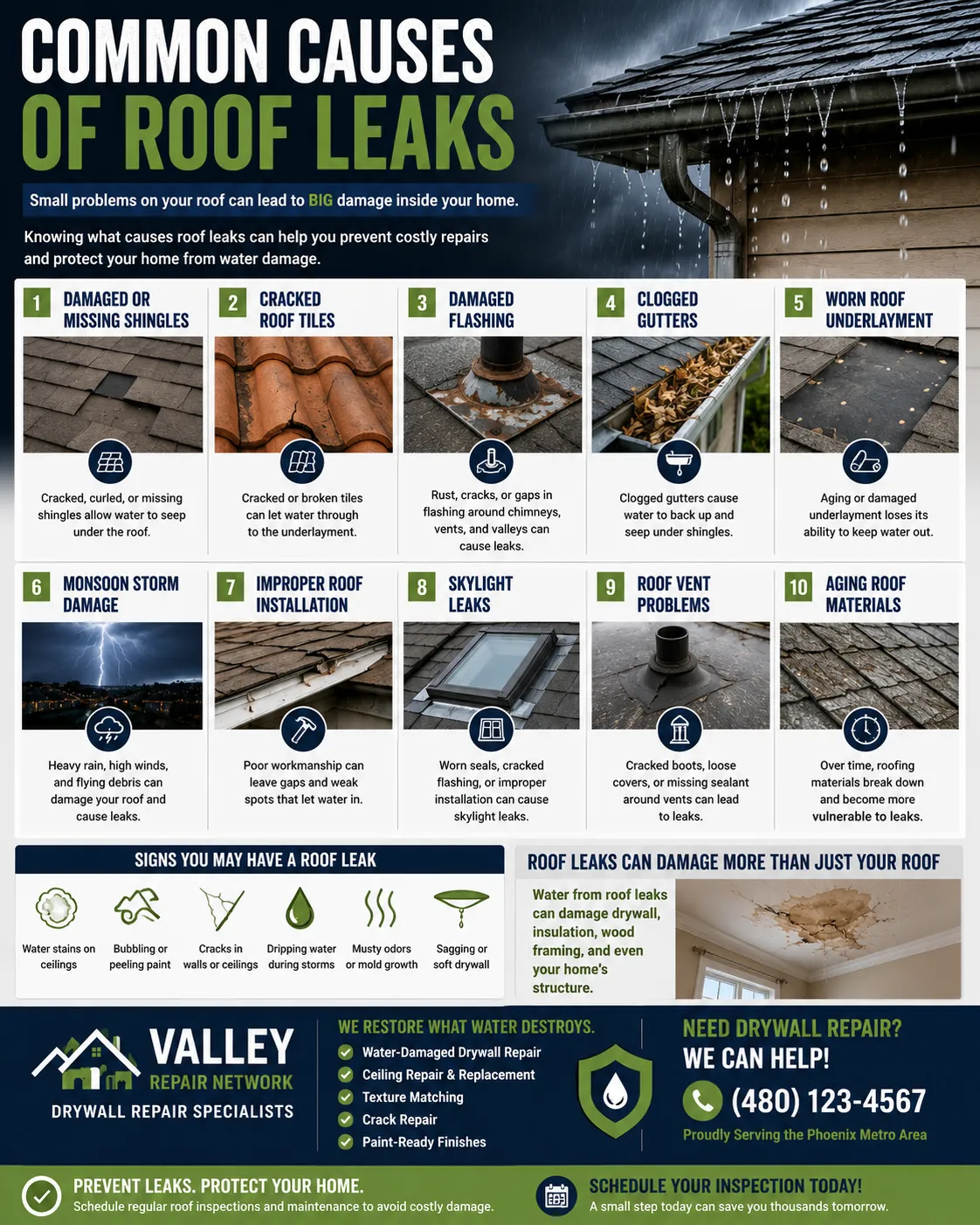
Common Causes of Roof Leaks: What Every Arizona Homeowner Should Know
A roof leak rarely happens without warning. In most cases, leaks develop over time due to weather, aging materials, or lack of maintenance. While a small leak may seem harmless, it can quickly lead to water-damaged drywall, mold growth, damaged insulation, and expensive structural repairs.
Understanding the most common causes of roof leaks can help you identify problems early and protect your home from costly damage.
1. Damaged or Missing Shingles
Shingles are your roof's first line of defense against rain. Over time, they can crack, curl, loosen, or blow away during strong winds.
Without proper coverage, rainwater can seep beneath the roofing materials and into your attic and walls.
Signs include:
Missing shingles
Curled edges
Cracked shingles
Loose roofing material
Replacing damaged shingles promptly can prevent much larger repairs.
2. Cracked Roof Tiles
Many Arizona homes have tile roofs that are built to last, but they're not indestructible.
Roof tiles can crack from:
Falling tree branches
Heavy foot traffic
Hail
Extreme temperature changes
Storm debris
Even one cracked tile can allow water to reach the underlayment and eventually enter your home.
3. Damaged Flashing
Flashing is the metal material installed around chimneys, skylights, vents, and roof valleys to keep water out.
Over time, flashing can:
Rust
Crack
Separate
Pull away from the roof
Once flashing fails, water can easily enter through these vulnerable areas.
4. Clogged Gutters
Your gutters are designed to move rainwater away from your roof.
When they become clogged with:
Leaves
Dirt
Debris
Bird nests
Water can back up onto the roof and eventually find its way underneath roofing materials.
Cleaning your gutters regularly is one of the easiest ways to prevent roof leaks.
5. Worn Roof Underlayment
Beneath your shingles or tiles is a waterproof underlayment that provides an additional layer of protection.
As roofs age, this material can:
Dry out
Crack
Tear
Lose its waterproof properties
When this happens, even minor rainstorms can cause leaks.
6. Arizona Monsoon Storm Damage
Arizona's monsoon season brings:
Heavy rain
High winds
Flying debris
Dust storms
Lightning
These storms often expose weak areas in older roofs, allowing water to enter your home.
After every major storm, it's a good idea to inspect your roof for damage.
7. Improper Roof Installation
Unfortunately, not every roof is installed correctly.
Poor workmanship can leave gaps around:
Flashing
Roof vents
Valleys
Chimneys
Skylights
Even a newer roof can develop leaks if installation wasn't completed properly.
8. Skylight Leaks
Skylights add natural light to your home, but they also create another potential entry point for water.
Leaks often occur because of:
Worn seals
Cracked flashing
Improper installation
Aging materials
Inspect skylights regularly, especially after heavy rain.
9. Roof Vent Problems
Roof vents help circulate air through your attic, but damaged vent boots or seals can allow water inside.
Common issues include:
Cracked rubber boots
Loose vent covers
Missing sealant
Rusted flashing
These repairs are often inexpensive if caught early.
10. Aging Roof Materials
Every roof has a lifespan.
As roofing materials age, they naturally become more vulnerable to:
Cracking
Warping
Weather damage
Water intrusion
Routine inspections become even more important as your roof gets older.
Signs You May Already Have a Roof Leak
Watch for these warning signs inside your home:
Water stains on ceilings
Bubbling or peeling paint
Soft drywall
Sagging ceilings
Musty odors
Mold growth
Dripping water during storms
Cracks in walls or ceilings
If you notice any of these issues, don't ignore them. Small leaks often become major repairs if left untreated.
Prevent Roof Leaks Before They Start
Preventative maintenance is the best way to protect your home.
Consider scheduling a roof inspection every year to:
Replace damaged shingles or tiles
Repair flashing
Clean gutters
Inspect vents
Check attic insulation
Identify potential problems early
A little maintenance today can save thousands of dollars tomorrow.
Roof Leaks Often Lead to Drywall Damage
When water enters your home, drywall is usually one of the first materials affected.
Roof leaks can cause:
Ceiling stains
Sagging drywall
Bubbling paint
Mold growth
Crumbling drywall
Once the roof has been repaired, damaged drywall should be professionally restored to prevent further issues and restore your home's appearance.
Valley Repair Network Can Restore Your Drywall
If a roof leak has damaged your walls or ceilings, Valley Repair Network is here to help. We specialize in repairing drywall damaged by roof leaks throughout the Phoenix metro area.
Our services include:
Water-damaged drywall repair
Ceiling drywall repair
Drywall replacement
Texture matching
Crack repair
Paint-ready finishes
Our experienced team delivers seamless repairs that make your home look like the damage never happened.
Schedule Your Drywall Repair Today
Don't let a roof leak ruin your home's interior. Contact Valley Repair Network today for professional drywall repair services and restore your home with confidence.