


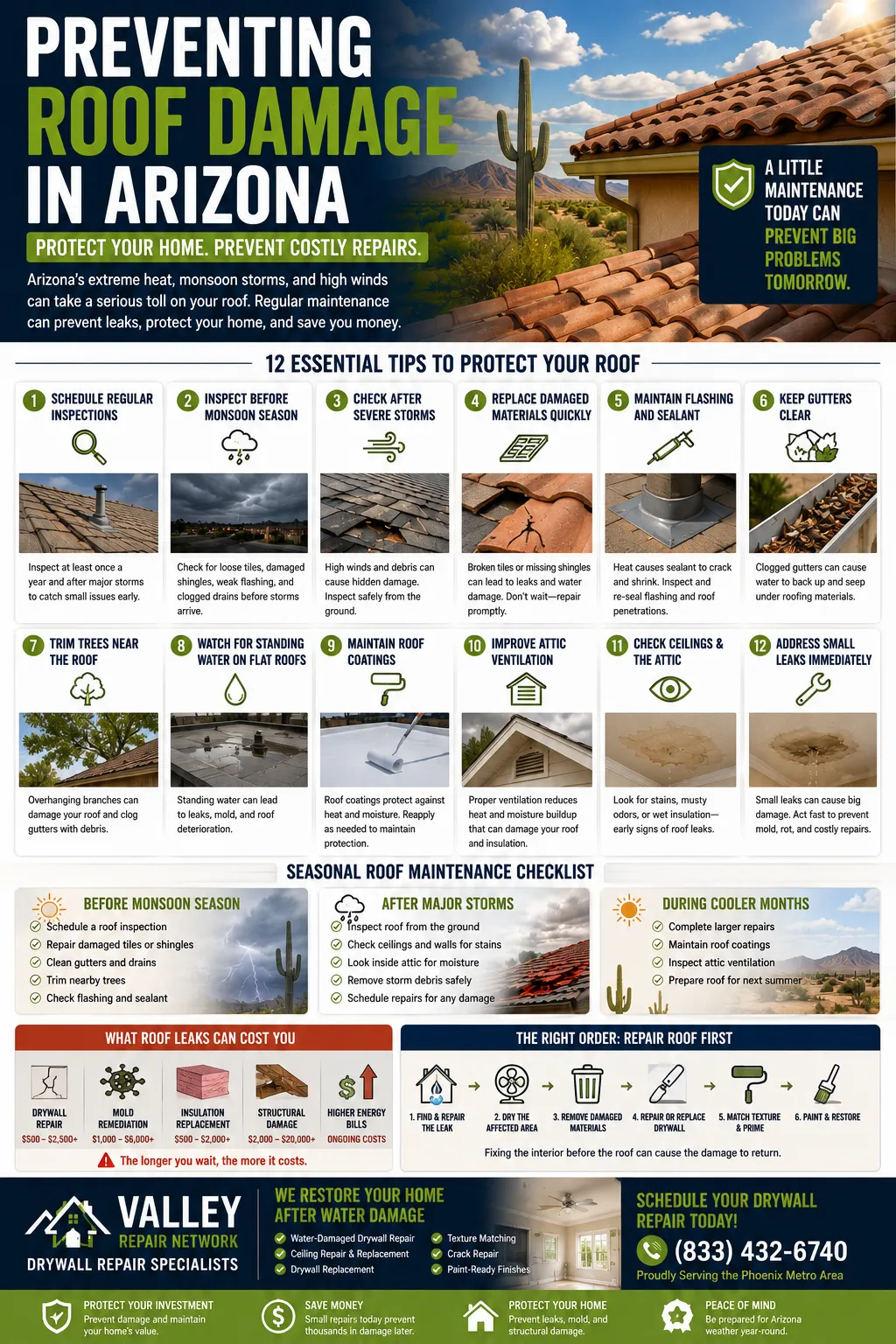
Preventing Roof Damage in Arizona: Essential Tips for Homeowners
Arizona roofs face some of the harshest conditions in the country. Extreme heat, intense sunlight, dust storms, high winds, and heavy monsoon rain can weaken roofing materials and create leaks that damage your ceilings, drywall, insulation, and framing.
Although no roof lasts forever, regular maintenance can prevent many common problems and help you avoid expensive emergency repairs. Here are practical ways to protect your Arizona roof throughout the year.
Why Arizona Roofs Require Special Attention
Arizona weather places roofing materials under constant stress.
Common threats include:
Extreme summer temperatures
Strong ultraviolet exposure
Sudden temperature changes
Monsoon rain
High winds
Dust and debris
Falling tree branches
Standing water on flat roofs
Small weaknesses can quickly turn into major leaks when monsoon storms arrive.
1. Schedule Regular Roof Inspections
A professional roof inspection can identify damage before water enters your home.
An inspection should check:
Broken or missing tiles
Cracked or curling shingles
Damaged flashing
Worn underlayment
Loose roof vents
Ponding water
Open seams
Signs of previous leaks
Arizona homeowners should generally inspect their roofs at least once a year and after major storms.
2. Inspect Your Roof Before Monsoon Season
Do not wait until the first major storm to discover a problem.
Before monsoon season, have your roof checked for:
Loose roofing materials
Cracked tiles
Damaged shingles
Weak flashing
Clogged drainage areas
Deteriorated sealant
Making small repairs early can prevent water from reaching your attic and drywall during heavy rain.
3. Check the Roof After Severe Storms
Strong winds and flying debris can damage a roof even when the damage is not visible from inside the home.
After a major storm, safely inspect the property from the ground for:
Missing shingles
Broken or displaced tiles
Tree branches on the roof
Damaged gutters
Loose flashing
Debris blocking drainage
Water stains inside the home
Never climb onto a wet or damaged roof. Contact a professional when a closer inspection is necessary.
4. Replace Broken or Missing Roof Materials Quickly
One cracked tile or missing shingle may seem minor, but it can expose the waterproof layer beneath the roof.
Damaged materials should be replaced before the next storm because exposed areas can allow water to reach:
Roof decking
Attic insulation
Ceiling joists
Interior drywall
Electrical systems
Prompt repairs are usually much less expensive than restoring water damage later.
5. Maintain Roof Flashing and Sealant
Flashing protects vulnerable areas where roofing materials meet other structures.
It is commonly installed around:
Chimneys
Skylights
Roof vents
Valleys
HVAC equipment
Wall-to-roof connections
Arizona heat can cause sealant to crack, shrink, and separate. Damaged flashing or sealant should be repaired before moisture can enter.
6. Keep Gutters and Drainage Areas Clear
Gutters, scuppers, and downspouts direct water away from the roof and foundation.
When they become clogged with leaves, dirt, roofing granules, or storm debris, water may back up and seep underneath roofing materials.
Clean drainage systems regularly, especially:
Before monsoon season
After dust storms
After strong winds
After nearby trees shed leaves or branches
Flat roofs should also be checked for standing water and blocked drains.
7. Trim Trees Near the Roof
Overhanging branches can scrape roofing materials, drop debris into gutters, or break during storms.
Trim branches that:
Touch the roof
Hang directly over the home
Block drainage areas
Could fall during high winds
Keeping trees maintained reduces impact damage and helps prevent clogged gutters.
8. Watch for Standing Water on Flat Roofs
Flat and low-slope roofs are common in Arizona, but they require proper drainage.
Standing water can contribute to:
Deteriorated coatings
Open seams
Soft roof decking
Mold
Interior leaks
If water remains on the roof long after a storm, have the drainage and roof surface inspected.
9. Maintain Roof Coatings
Some Arizona roofs use reflective coatings to protect against heat and moisture.
Over time, coatings may:
Crack
Peel
Bubble
Wear thin
Separate around penetrations
Recoating the roof when needed can improve waterproofing and help protect roofing materials from intense sunlight.
10. Improve Attic Ventilation
Proper attic ventilation helps control excessive heat and moisture below the roof.
Poor ventilation may contribute to:
Premature roofing deterioration
Trapped moisture
Mold growth
Higher cooling costs
Damaged insulation
Make sure attic vents are open, properly sealed, and not blocked by insulation or debris.
11. Check Ceilings and the Attic for Early Warning Signs
Roof damage often begins before active dripping appears.
Watch for:
Brown or yellow ceiling stains
Bubbling paint
Musty odors
Wet insulation
Dark spots on wood
Soft or sagging drywall
Daylight entering through the roof
Water marks in the attic
Investigating early signs can prevent the damage from spreading.
12. Address Small Leaks Immediately
A small leak does not stay small forever.
Water can travel along framing and appear far away from the original roof opening. Delayed repairs may lead to:
Mold growth
Ceiling damage
Drywall replacement
Damaged insulation
Wood rot
Structural repairs
Higher restoration costs
Have the leak located and repaired as soon as possible.
Avoid Walking on Your Roof Unnecessarily
Walking on a roof can crack tiles, damage coatings, loosen shingles, or create new openings.
Arizona tile roofs are especially vulnerable to damage from improper foot placement.
Leave roof inspections and repairs to trained professionals whenever possible.
Create a Seasonal Roof Maintenance Schedule
A simple maintenance plan can help protect your home year-round.
Before Monsoon Season
Schedule a roof inspection.
Repair damaged tiles or shingles.
Clean gutters and drains.
Trim nearby trees.
Check flashing and sealant.
After Major Storms
Inspect the roof from the ground.
Check ceilings and walls for stains.
Look inside the attic for moisture.
Remove storm debris safely.
Schedule repairs for any damage.
During the Cooler Months
Complete larger repairs.
Maintain roof coatings.
Inspect attic ventilation.
Prepare the roof for the next summer.
Repair the Roof Before Restoring Interior Damage
If roof damage has caused stains, sagging drywall, or ceiling damage, fix the source of the leak before repairing the interior.
The proper order is:
Locate the source of the leak.
Repair the roof.
Dry the affected area completely.
Remove damaged materials when necessary.
Repair or replace the drywall.
Match the texture.
Prime and repaint the area.
Repairing the drywall first may allow the same damage to return during the next storm.
Valley Repair Network Can Restore Your Water-Damaged Drywall
If roof damage has affected your walls or ceilings, Valley Repair Network can help restore your home's interior. We specialize in drywall repairs caused by roof leaks and water intrusion throughout the Phoenix metro area.
Our services include:
Water-damaged drywall repair
Ceiling repair and replacement
Drywall patching
Texture matching
Crack repair
Paint-ready finishes
We provide professional repairs designed to make your walls and ceilings look like the damage never happened.
Schedule Your Drywall Repair Today
Do not wait for a ceiling stain or small leak to become a major repair. Contact Valley Repair Network at (833) 432-6740 to schedule your drywall repair estimate.