


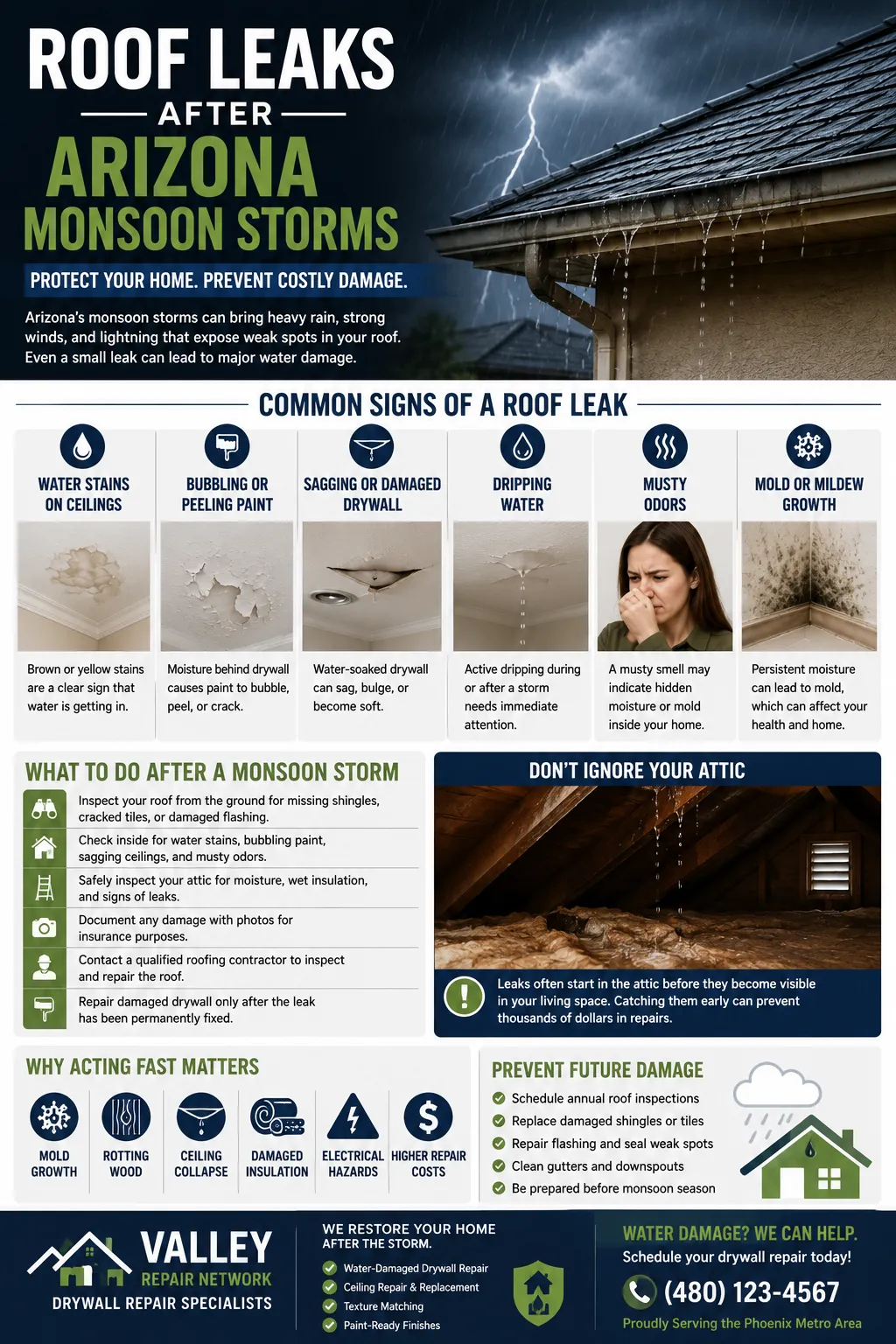
Roof Leaks After Arizona Monsoon Storms: Signs, Prevention, and Drywall Repair
Arizona's monsoon season brings heavy rain, strong winds, dust storms, and intense lightning. While these storms provide much-needed rainfall, they can also expose weaknesses in your roof that may lead to leaks and costly water damage.
Even a small roof leak can quickly turn into damaged drywall, mold growth, ruined insulation, and expensive repairs if left untreated. Knowing what to look for after a monsoon storm can help protect your home and prevent bigger problems.
Why Monsoon Storms Cause Roof Leaks
Arizona roofs are built to handle extreme heat, but monsoon storms create a different type of stress.
Heavy rain can exploit weak spots caused by:
Aging roofing materials
Cracked or missing shingles
Damaged roof tiles
Worn flashing around vents and chimneys
Clogged gutters
Previous storm damage
Poor roof maintenance
High winds can also lift roofing materials, allowing water to seep underneath and into your home.
Common Signs of a Roof Leak
After a monsoon storm, inspect your home for these warning signs:
Water Stains on Ceilings
Brown or yellow stains often indicate that water has entered through the roof.
Bubbling or Peeling Paint
Moisture trapped behind drywall can cause paint to blister, peel, or crack.
Sagging Drywall
Water-soaked drywall loses its strength and may begin to sag or bulge.
Dripping Water
Active dripping during or after a storm usually means the leak needs immediate attention.
Musty Odors
A damp, musty smell may indicate hidden moisture inside walls, ceilings, or the attic.
Mold Growth
Persistent moisture from roof leaks can lead to mold, especially in poorly ventilated areas.
Don't Ignore Your Attic
Many roof leaks begin in the attic before they become visible inside your living space.
After a storm, safely inspect your attic for:
Wet insulation
Damp wood framing
Water stains
Mold growth
Sunlight shining through the roof
Active dripping
Catching leaks early can prevent thousands of dollars in repairs.
Why Drywall Is Often the First Thing to Show Damage
Drywall acts like a sponge when exposed to water.
By the time you notice a ceiling stain or bubbling paint, water may have already soaked:
Drywall
Insulation
Ceiling joists
Wall framing
That's why it's important to repair both the roof and any interior damage as quickly as possible.
What To Do After a Monsoon Storm
If you suspect your roof has been damaged:
Walk around your home and inspect the roof from the ground.
Look for missing shingles, cracked tiles, or damaged flashing.
Check ceilings and walls for water stains or bubbling paint.
Inspect your attic for signs of moisture.
Document any damage with photos for insurance purposes.
Contact a qualified roofing contractor to inspect and repair the roof.
Repair damaged drywall only after the leak has been permanently fixed.
Why You Shouldn't Delay Repairs
Waiting to repair a roof leak can lead to:
Mold growth
Rotting wood
Ceiling collapse
Damaged insulation
Electrical hazards
Increased repair costs
A small leak today can become a major restoration project after the next storm.
Can Insurance Cover Monsoon Damage?
In many cases, homeowner's insurance may cover sudden storm-related roof damage, depending on your policy and the cause of the leak.
It's important to:
Take photos immediately
Keep records of the storm damage
Prevent additional damage if it's safe to do so
Contact your insurance company promptly
Save repair estimates and receipts
Check your policy or speak with your insurance provider to understand your coverage.
Repair Your Drywall After the Roof Is Fixed
Once the source of the leak has been repaired, damaged drywall should be professionally restored.
Water-damaged drywall may need:
Drywall replacement
Ceiling repairs
Texture matching
Stain-blocking primer
Interior painting
Proper repairs ensure your home looks great and help prevent future issues.
Protect Your Home Before the Next Storm
The best way to avoid costly repairs is through regular roof maintenance.
Consider scheduling an annual roof inspection to:
Replace damaged shingles or tiles
Repair flashing
Clear gutters
Identify weak spots
Catch small issues before monsoon season begins
Preventive maintenance can save you thousands of dollars in future repairs.
Valley Repair Network Is Here to Help
If your home has suffered drywall damage after an Arizona monsoon storm, Valley Repair Network is here to help. We specialize in repairing ceilings and walls damaged by roof leaks, restoring your home with seamless, professional results.
Our drywall repair services include:
Water-damaged drywall repair
Ceiling repair
Drywall replacement
Texture matching
Crack repair
Paint-ready finishes
We proudly serve homeowners throughout the Phoenix metro area with reliable, high-quality workmanship.
Schedule Your Drywall Repair Today
If you have water stains, sagging drywall, or ceiling damage after a monsoon storm, don't wait. Contact Valley Repair Network today for a professional drywall repair estimate and restore your home before the next storm arrives.